🌸 From Florists to Makers: The Evolution of Modern Floral Design and Garden Style Floristry
A Quiet Revolution in Modern Floral Design
When we talk about the evolution of modern floral design, we can no longer ignore the creative wave led by a new generation of floral artists and makers. These designers are not interested in repeating rigid formulas or following rules simply because they have always existed. Instead, they embrace experimentation, individuality, and emotional expression—transforming floral design into a form of everyday art rather than a service reserved for weddings and holidays 🌼.
In today’s world, flowers are no longer owned solely by traditional florists. They belong to makers—artists, gardeners, stylists, photographers, and creative individuals who use garden style floristry as a language to express how they live, feel, and connect with nature.
From Florists to Makers|How Floral Design Became a Personal Art Form
This shift reflects a broader cultural movement. Just as handcrafted goods and slow living have gained popularity, contemporary floral design has moved away from mass production toward intentional, expressive creation.
Floral makers today see flowers not as decorative objects, but as living materials. Their work often blurs the line between floral arrangement, sculpture, and environmental art. This mindset has redefined what floral design can be—and who it is for 🌿.
Martha Stewart and the Democratization of Floral Style
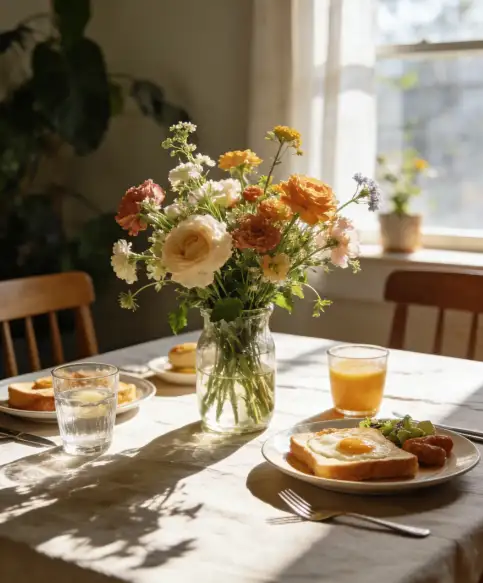
This transformation echoes a familiar moment in American cultural history. In the 1980s, Martha Stewart reshaped how people perceived domestic beauty. She brought flowers out of formal arrangements and into everyday life—onto dining tables, kitchen counters, and casual gatherings.
Her influence helped normalize the idea that flowers were not a luxury, but an accessible form of self-expression. Today’s floral makers build on that foundation, pushing it further by infusing flowers with bold personality, texture, and even sensuality ✨.
Holly Heider Chapple|A Defining Voice in Garden Style Floristry
Among the most influential figures in modern garden style floral design is Holly Heider Chapple, a Virginia-based floral designer widely recognized for redefining contemporary floristry in the United States.
Her work is often compared to that of Constance Spry, the legendary British floral designer who revolutionized floral aesthetics in the early twentieth century. Like Spry, Chapple honors tradition while refusing to be constrained by it.
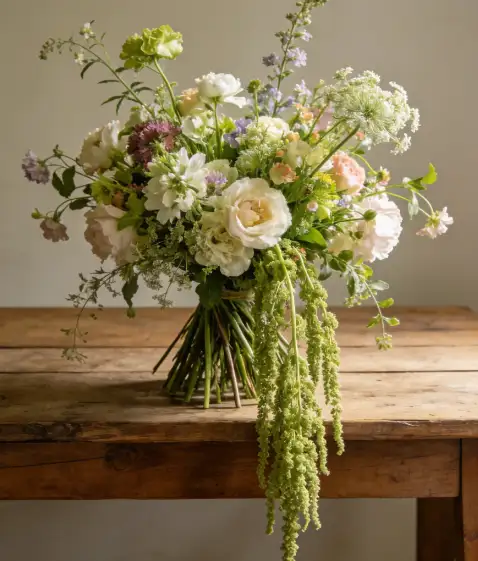
Her hand-tied bouquets—featuring pink roses, white hydrangeas, blue echinacea, and delicate seasonal blooms—are tied loosely with silk ribbon, allowing natural movement and asymmetry. The result feels wild yet refined, intentional yet alive 💐.
The Rise of Garden Style Floral Arrangements
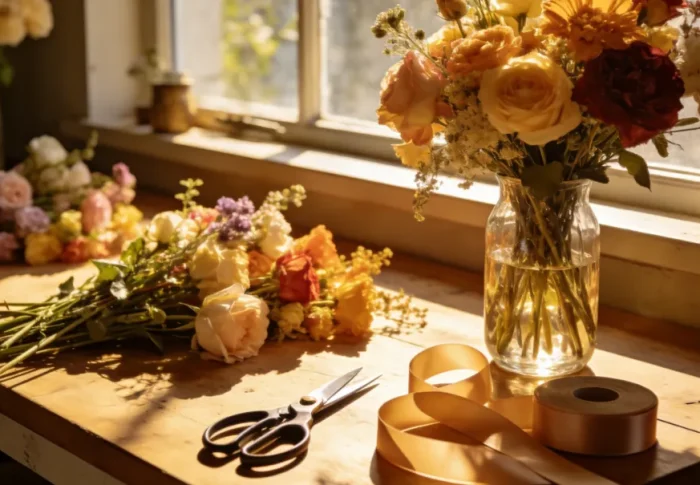
Today’s garden style floral arrangements prioritize movement, negative space, and organic structure. Rather than tightly packed designs, these arrangements breathe. They look as though they were gathered directly from a garden moments before being placed in a vase.
This aesthetic has become one of the most influential floral design trends in both weddings and everyday styling across Europe and North America.
Foam-Free Floral Design and Sustainable Practices
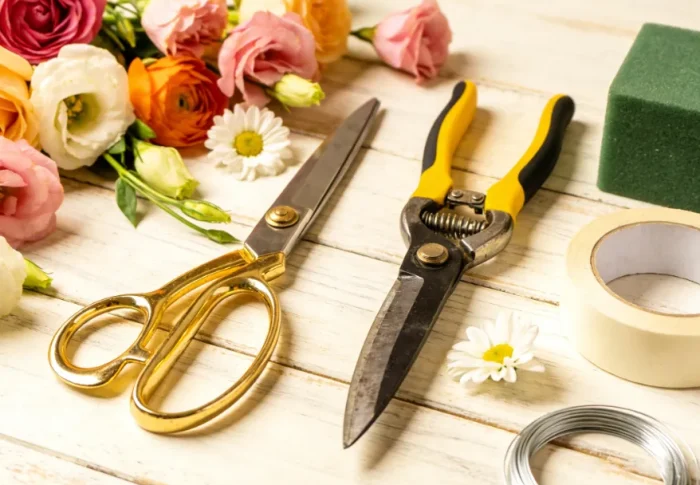
One of the defining characteristics of contemporary garden style floristry is the move away from floral foam. Instead, designers rely on pin frogs, chicken wire, branches, and custom-built armatures.
This approach not only supports sustainable floral design, but also allows for greater flexibility and natural flow. Flowers are supported rather than forced, resulting in arrangements that feel spontaneous and authentic 🌱.
Lessons from the Past|Before Floral Foam Existed
In 1985, I had the privilege of sharing a stage with two floral designers whose careers began in the 1920s and 1930s—Dorothy Schroeder Newell and Leonard Saylor. They demonstrated how floral arrangements were constructed before floral foam existed, using simple wire grids and intuitive mechanics.
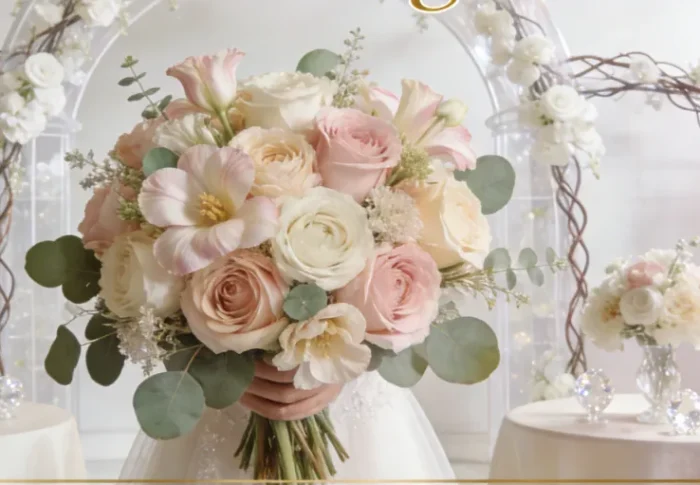
Many of those same techniques are now reappearing in modern garden style wedding bouquets, proving that innovation often comes from rediscovery rather than invention.
Nostalgia as a Design Language
Despite its contemporary appeal, garden style floristry carries a deep sense of nostalgia. Brooklyn-based floral artist Liza Lubell describes her work as looking “like it was just picked from my grandmother’s garden.”
Her designs mix wildflowers, herbs, and traditional roses, creating arrangements that feel both intimate and elevated. In one wedding for a couple who loved camping, she incorporated pinecones and ferns into the bouquet—an example of how floral design inspired by nature can tell personal stories 🌲.
A Community of Contemporary Floral Artists
This movement includes a wide range of creative voices:
- Amy Merrick, known for her minimalist, Japanese-inspired floral compositions
- Alicia Schwede, who documents floral moments through photography
- Franciose Weeks, whose botanical installations often include moss and mushrooms
- Susan McCleary, who transforms flowers into wearable art and fashion accessories
Together, these designers illustrate how floral design as art continues to evolve beyond traditional boundaries.
The Legacy of Constance Spry
At the core of modern floral philosophy is Constance Spry, whose radical ideas forever changed the floral world. At a time when formal symmetry dominated, she introduced branches, foliage, herbs, and garden elements into high-profile events—including royal weddings.
She believed deeply that flowers were a means of self-expression, not status. Her influence remains central to today’s floral makers and artists, who continue to challenge convention 🌸.
Learning Floral Design Beyond Technique
Professional programs such as the Floral Design Institute in Portland teach more than mechanics. Students study the history of modern floral design, cultural context, and emotional storytelling through flowers.
This is why many emerging designers seek out workshops led by Holly Chapple and other leaders in the field—not only to learn skills, but to join a global creative community 🌍.
Floral Design for Everyday Life
You don’t need to be a professional florist to participate in this movement. In Colorado, Amy Cason, a full-time mother, began arranging flowers simply to brighten her home. Through online classes and social media, her backyard arrangements eventually turned into a weekend floral business.
Her story reflects a growing truth: modern floral design belongs in everyday life, not just formal settings 🏡💐.
Flowers as a Way of Living Beautifully
Today, floral design exists far beyond shop windows. Through social media, workshops, and global exchange, anyone with curiosity and passion can explore their own floral voice.
Whether you are a professional designer, a weekend hobbyist, or someone who simply places a few stems on the table, you are part of this evolution.
As Constance Spry once believed, flowers belong to everyone—every lifestyle, every season, every emotion.
Modern floral design is not just about aesthetics.
It is an attitude. A philosophy. A way of choosing to live beautifully. 🌿✨