🌸 Flower Design in the Age of Automation: Why We’re Turning Back to Blooms
In a world increasingly defined by automation, minimalism, and relentless efficiency, flower design has quietly reclaimed its place as a deeply human art form. Across Europe and North America, flowers are no longer seen merely as decorative accents—they have become a way of slowing down, reconnecting with the senses, and honoring impermanence.
Flowers, by nature, resist permanence. Their fleeting beauty carries an undeniable sense of soul. Through deliberate choices of color, texture, form, and scent, floral arrangements awaken senses dulled by screens and algorithms, reconnecting us with one of nature’s most poetic expressions 🌿.
Whether crafted for a wedding, styled as a seasonal dining table centerpiece, or placed simply beside a bed, floral design reaches far beyond visual aesthetics. It becomes a language of emotion, memory, and presence.
🌼 From Weekend Hobby to Mindful Practice
Within this floral revival, more women—and increasingly men—are transforming flower arranging from a casual pastime into a meaningful mindfulness ritual.
Take Elise, a graphic designer based in Brooklyn. During the pandemic, she began arranging flowers at home simply to bring warmth and color into an otherwise closed-off world. What started as a small creative outlet soon became a cornerstone of her self-care routine.
Every Saturday morning, she visits the local flower market.
“There’s a stillness there,” she says. “I spend hours choosing stems, touching petals, breathing in the scent, and slowly imagining how everything might come together.”
That tactile, intentional process—hands-on and unhurried—became a form of emotional healing. When Elise began sharing her intimate, seasonally driven arrangements on Instagram, her following grew quickly. People weren’t drawn to perfection, but to presence.
🌿 Floral Design Meets the Wellness Movement
Floral design has also found a natural home within the wellness and self-care culture that continues to shape modern Western lifestyles.
Keywords like mindfulness activities, healing hobbies, and home wellness are now closely tied to floral workshops, plant subscription boxes, and immersive creative experiences. From Tokyo to Copenhagen to Toronto, floral studios are opening their doors not just to event planners or stylists, but to anyone seeking calm through creation 🌸.
Many of these experiences combine:
- Aromatherapy
- Color psychology
- Seasonal plant education
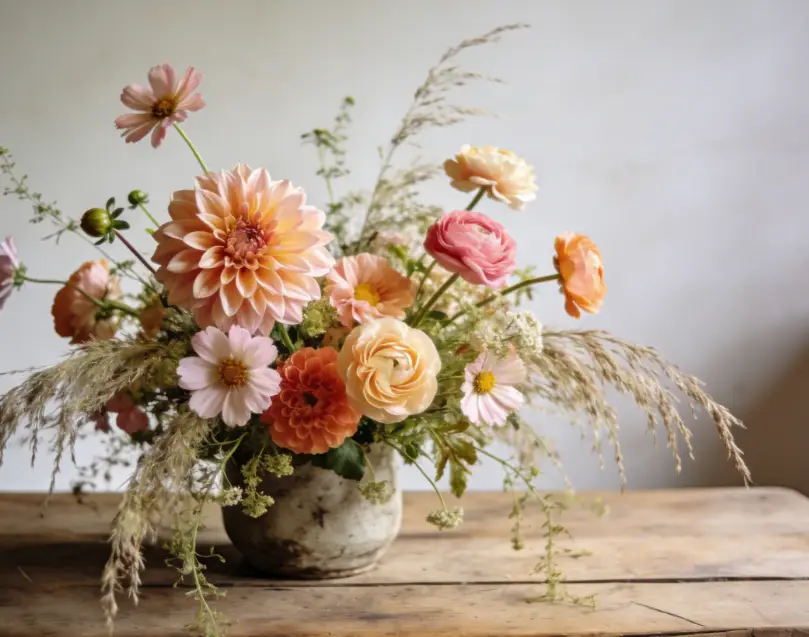
Participants are encouraged to arrange dahlias, eucalyptus, or wild branches intuitively—using flowers to regulate mood, restore energy, and even improve sleep cycles.
🌱 Sustainability and the Rise of Slow Flowers
Of course, modern floral design is no longer just about beauty.
As sustainability reshapes consumer values, the floral industry is being pushed to rethink how aesthetics can coexist with responsibility. Foam-free arrangements, seasonal sourcing, and the Slow Flower Movement have become central to ethical design.
In Portland, event florist Camilla works exclusively with local growers.
“We’re far more aware of carbon footprints now,” she explains. “Flying roses in from South America in winter makes less sense than working with dried grasses or naturally blooming branches.”
In the high-end market especially, clients are increasingly interested in the story behind the flowers—where they came from, how they were grown, and why they matter 🌾. Beauty without context is no longer enough.
🏛️ Floral Trends for 2025: Living Architecture
By 2025, floral aesthetics continue to evolve toward a more architectural, intentional language.
We’re seeing:
- Monochromatic palettes
- Asymmetrical compositions
- Unexpected materials like vegetables, wild herbs, and sculptural branches
This hybrid of nature and modernism aligns seamlessly with interior design trends in luxury homes, boutique hotels, and co-working spaces. Florists are increasingly collaborating with interior designers, using negative space, focal balance, and color psychology to create installations that feel like living architecture 🌿.
The line between floral design and spatial styling is steadily dissolving.
🍽️ Table Flowers as Everyday Ritual
Floral design has also redefined how we experience the dining table.
In many Western homes, the table is no longer just functional—it’s a curated scene. A soft bouquet of peonies paired with candlelight and linen napkins can turn an ordinary Tuesday dinner into something cinematic.
That’s the quiet magic of flowers. They don’t demand extravagance; they communicate intention 🌼.
Lifestyle bloggers and Pinterest creators have embraced floral styling as part of home organization, hosting tips, and kitchen aesthetics—content that is not only beautiful, but highly searchable.
📱 Digital Tools and the Business of Beauty
Technology, too, has made floral design more accessible.
Apps like FloristPro and BouqLab help beginners visualize arrangements by texture, bloom cycle, or color harmony. Online platforms now offer virtual consultations, with curated flower kits delivered straight to the door.
Even real estate professionals are leveraging floral styling as a marketing tool. Thoughtfully placed arrangements enhance listing photos, increase curb appeal, and subtly influence buyer perception 🌺. In this sense, flowers have become both emotional messengers and financial assets.
🌻 At Its Core, Floral Design Remains Human
Beyond trends, metrics, and market value, floral design remains a profoundly human art.
It exists in quiet moments:
- A mother weaving wildflowers into her daughter’s hair
- A neighbor slipping daisies through a fence as a small gift
- A sunflower resting beside a hospital bed
Flowers have always been our translators—expressing love, apology, celebration, and remembrance when words fall short.
🌼 A Gentle Act of Resistance
In an era of constant distraction and speed, flower arranging has become a quietly radical act.
It asks us to slow down, observe closely, and listen.
As Marie, a floral therapy instructor from Provence, once said:
“I thought arranging flowers was about perfection. It isn’t. It’s about intimacy—respecting the crooked stem and understanding that wild flowers often tell the best stories.”
Seen this way, contemporary floral design is an art of being. Fleeting, emotional, and deeply alive 🌸.